
Snow Blower Won't Start? 8 Fixes to Try Before Storm Day
Work through eight checks in order of likelihood: controls, primer and choke, old fuel, fuel line, spark plug, oil, flooding and carburetor, with a symptom table.
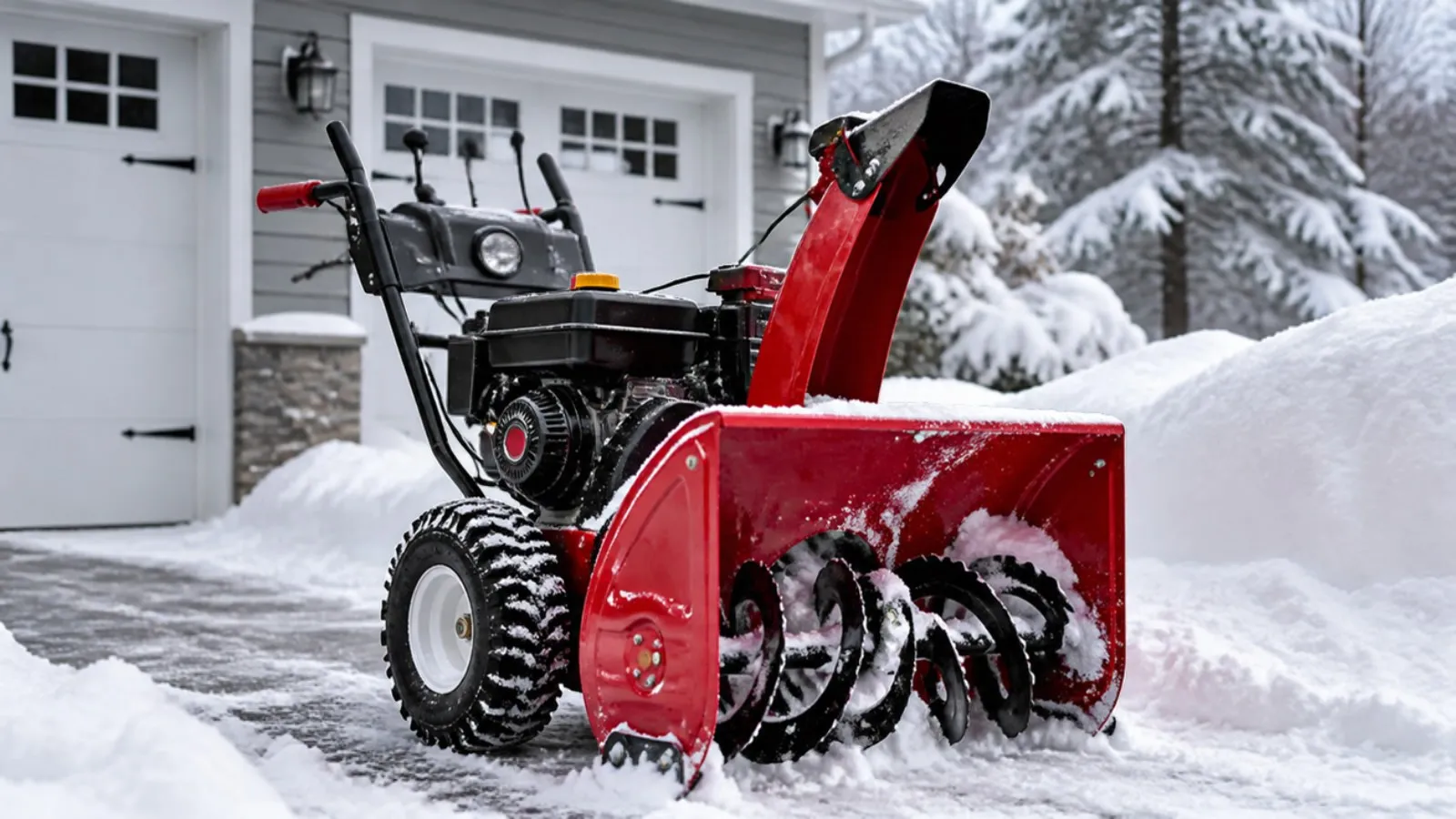 Save
The most common reasons a snow blower will not start are a control or key left in the wrong position, fuel that has gone stale, and a fouled spark plug. Work through the eight checks below in order, because the early ones take a minute and fix a surprising number of machines. Do them now, in the dry, rather than on the morning of a storm.
Quick answer
Set the throttle to high, the fuel valve open, the choke to full and the run switch on, and make sure the safety key is fully seated. If that fails, replace any fuel that has sat for more than a month or two, prime the engine, then check the spark plug. Most no-start problems are fuel, spark or air, so the order below follows that logic.
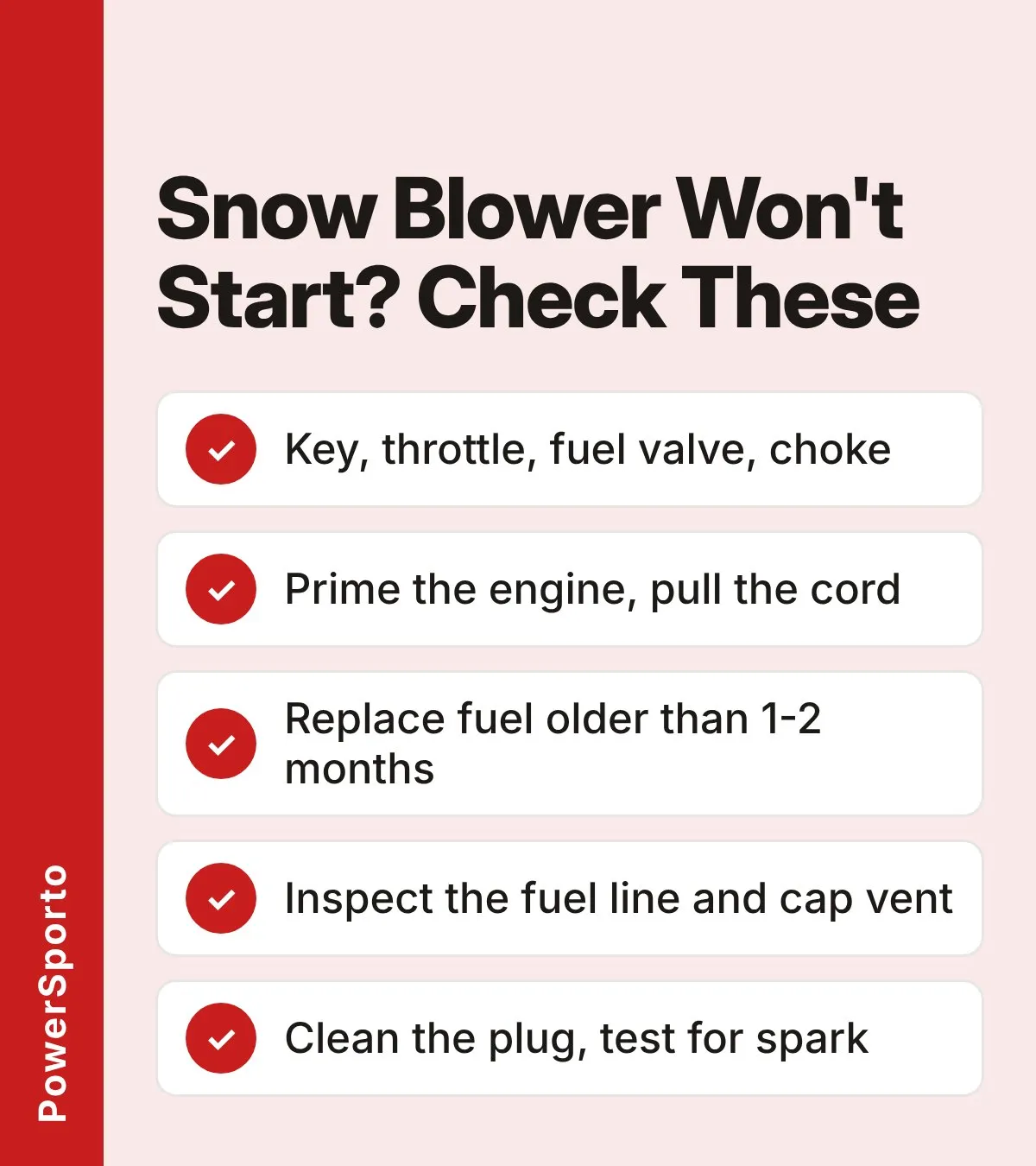
Before you start: safety
- Work outdoors or in a well-ventilated space. Exhaust contains carbon monoxide, so never run the engine in a closed garage.
- Disconnect the spark plug wire before you reach near the auger, the chute or any moving part.
- Gasoline is flammable. Keep it away from heat, sparks and pilot lights, and do not refuel a hot engine.
- Dispose of old fuel at a local hazardous-waste or recycling drop-off, not down a drain or onto the ground.
What you need
- Fresh gasoline in a clean can, and fuel stabilizer
- Spark plug socket, wire brush and a replacement plug that matches your owner’s manual
- Carburetor cleaner
- Clean rags and a funnel
- Insulated pliers (for a spark test)
- Your owner’s manual, for the plug type, oil grade and primer count
The 8 fixes, in order
1. Check the controls and the safety key
Set the throttle to high, the fuel shut-off valve to open, the choke to full for a cold engine and the run switch to on. Confirm the safety key is pushed all the way in and not cracked. On models with a bail bar or control levers, make sure they engage and move freely, since frozen cables can stop them working. A fuel valve left closed after storage is one of the most common causes.
2. Prime the engine and use the choke
Press the primer bulb a few times (the sources suggest between two and five presses, so follow your manual) and then pull the cord right away. After months in storage it can take three or four attempts for fuel to reach the carburetor, especially in cold weather. If it coughs but does not catch, repeat once or twice, then move on rather than pressing the bulb endlessly.
3. Replace old fuel
Smell and look at the fuel. A sour odor, a darker color, varnish or debris all mean it is past its best, and fuel older than about 30 to 60 days is treated as suspect. Drain the tank into an approved container, refill with fresh gasoline and, if you like, add fuel stabilizer at the rate printed on its label. Ethanol-free fuel or stabilizer helps for the next off-season. If it still will not start, wait an hour or two for the fresh fuel to work through, then try again. For longer-term advice, see how to winterize a motorcycle for storage, where the same fuel-stabilizer logic applies.
4. Inspect the fuel line and gas cap vent
Look along the fuel line for wet spots, kinks, brittleness or cracks. A line that feels hard, or one that is empty while the tank has fuel, means the carburetor is not getting supplied, and a damaged line should be replaced. Also loosen the gas cap and try starting: a clogged cap vent can block fuel flow, and if the engine starts with the cap loose, replace the cap.
5. Clean or replace the spark plug
Disconnect the plug wire and remove the plug. Black soot points to a rich mixture, a wet electrode to flooding, and a cracked porcelain insulator means the plug must be replaced. Clean carbon deposits with a wire brush, dry the plug, reinstall it and reconnect the wire firmly. You can also test for spark: ground the plug against the engine block with insulated pliers, pull the cord and look for a strong blue spark. A weak yellow spark points to the plug, and no spark at all points to the ignition coil or a kill-switch problem.
6. Check the oil level
Some engines will not run, or shut down, when oil is low. Place the machine on level ground, wipe the dipstick, reinsert it fully and read the level. Top up with the grade your manual lists, and replace oil that looks dark or burnt.
7. Clear a flooded engine
If the engine smells strongly of fuel or the plug is soaked, it is probably flooded. Set the choke to off, hold the throttle high and pull the cord five to eight times to clear the excess. Fit a dry plug before trying again, and go easy on the primer.
8. Clean the carburetor
A fire-then-die pattern, sputtering, a strong fuel smell or a wet bowl with no fuel catching all point to the carburetor, especially after storage with old gas. Remove the air filter and spray carburetor cleaner into the intake following the can’s directions, or remove the bowl and clean it and the jet. If this does not help, the carburetor may need professional cleaning or replacement.
Symptom table
| What you see | Likely cause | First fix |
|---|---|---|
| Nothing happens, cord won’t pull or key loose | Safety key or controls | Fix 1 |
| Coughs, no firing after storage | Stale fuel or no fuel at carb | Fixes 2 and 3 |
| Fires then dies, sputters | Gummed carburetor | Fix 8 |
| Strong fuel smell, wet plug | Flooded engine | Fix 7 |
| Dry plug, no fuel in line | Cracked line or blocked vent | Fix 4 |
| Weak yellow or no spark | Fouled plug, coil or switch | Fix 5 |
| Shuts down quickly | Low oil | Fix 6 |
Common mistakes
- Skipping the fuel valve and key check and going straight to the carburetor.
- Adding stabilizer to old fuel and hoping it fixes it. Stabilizer protects fresh fuel and will not restore bad gas.
- Flooding the engine with too many primer presses.
- Leaving the plug wire off or loose after cleaning the plug.
- Looking at the shear pins. They affect the auger only and do not stop the engine from starting.
- Running the engine in an enclosed garage.
When to call a professional
Stop and take it to a small engine shop if there is no spark with a known-good plug, the cord pulls with almost no resistance (which can indicate low compression), or the carburetor is badly corroded. If the unit is under warranty, contact the manufacturer first. One source estimates repairs at about $75 to $300, though costs vary by shop and region.
Sources
 Save
Frequently asked questions
Why won't my snow blower start after sitting all summer?
Old fuel is the most common cause. Gas that sat for months can leave gummy residue that blocks the carburetor, so drain it, refill with fresh fuel and prime the engine. A fuel valve left closed after storage is the other quick thing to check.
How many times should I press the primer bulb?
Press it three to five times for a cold start, or two to three times as a starting point, then pull the cord. Pressing it far more than that can flood the engine. Check your owner's manual for the count your model needs.
Do shear pins stop a snow blower from starting?
No. Shear pins connect the auger to its shaft, so a broken one stops the auger from turning but does not stop the engine from running. If the engine starts and the auger does not spin, check the pins.
When should I take it to a repair shop?
Go to a shop if you get no spark with a new plug, the pull cord feels unusually easy with no firing, or the carburetor is badly gummed. If the machine is under warranty, contact the manufacturer first.